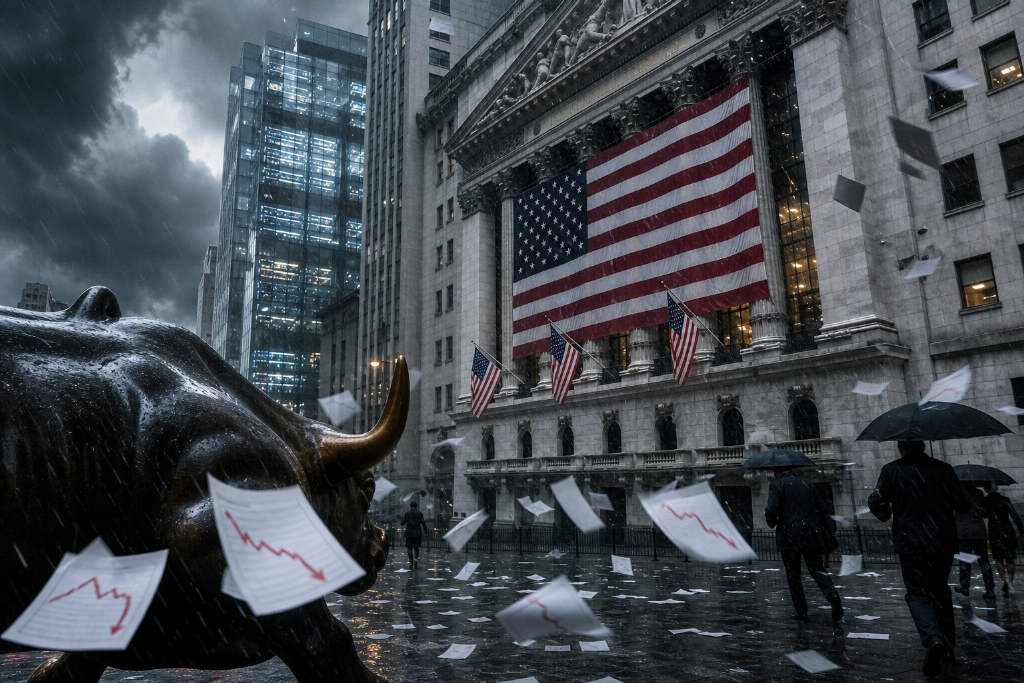
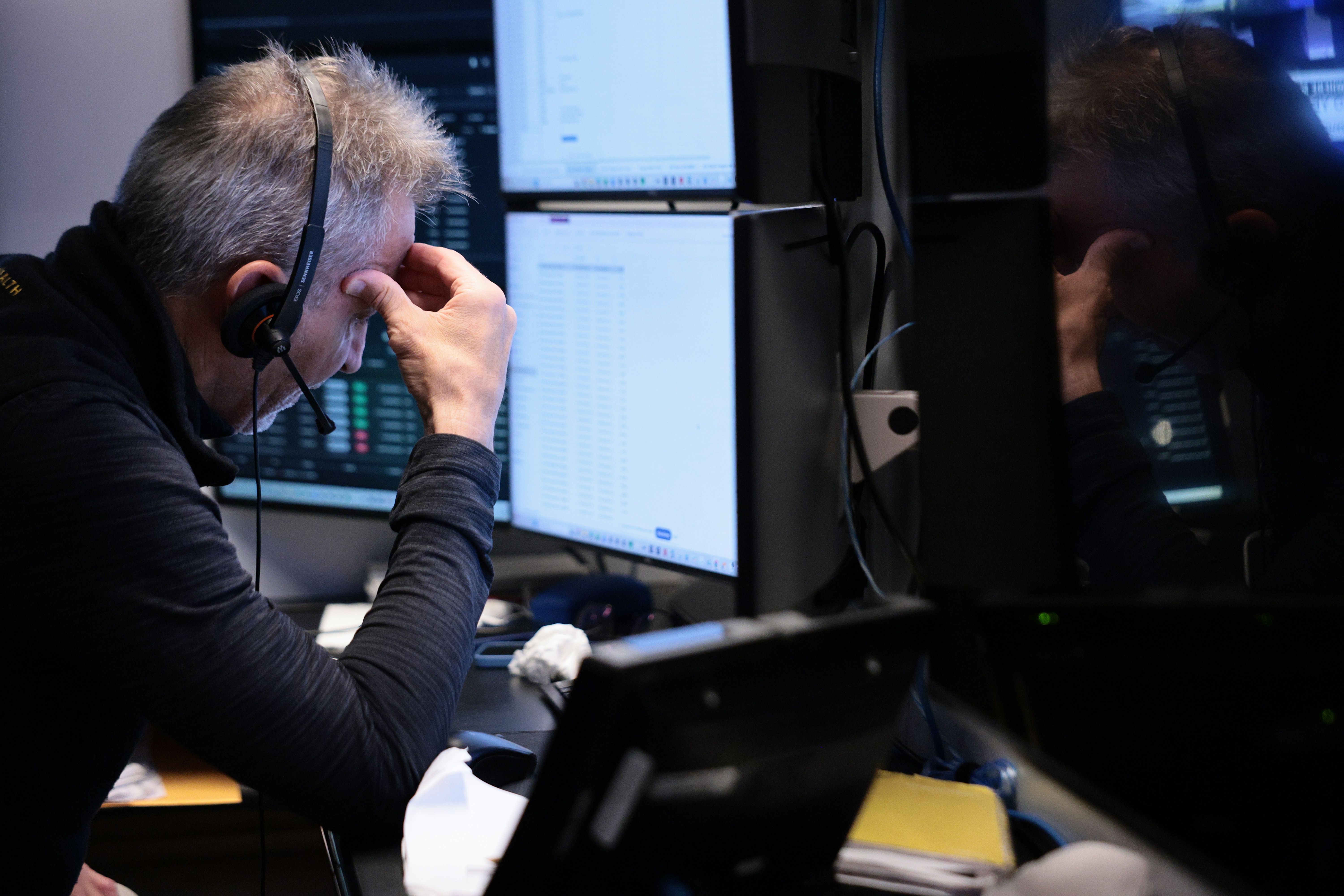
US stocks2026-08-31 07:22:23S&P 500 Momentum Index Heads for Worst Quarter in 25 Years as Wall Street Trade ReversesWall Street’s long-favored momentum trade is running into a sharp reversal as AI-linked stocks swing violently and short covering accelerates, according to a BlockBeats report published Aug. 31. Data cited in the report shows the S&P 500 Momentum Index has fallen more than 9% since July 1, even as the broader S&P 500 gained about 2.8% over the same period, putting the momentum gauge on track for its worst single-quarter performance in 25 years. The turn marks a dramatic shift from the second quarter, when the index surged 44% for its best quarter on record. Over the past five years, it had risen 133%, making it one of the most crowded institutional trades. Bank of America said momentum trading in July posted its second-worst month in nearly 40 years, behind only the 2009 financial crisis period. Goldman Sachs said Aug. 19 was one of the worst trading days in nearly two years for systematic long-short funds, with roughly half of losses tied to momentum strategies breaking down. At the same time, speculative net short positions in Nasdaq-100 futures have climbed to their highest level in nearly 20 years.840
Bitcoin2026-07-24 00:00:15Bitcoin’s Drop Below $62,000 Is Not About Saylor, Analysis SaysStrategy’s sale of 32 BTC was too small to explain Bitcoin’s multi-day decline and liquidation wave. The cited research view says the larger issue is that Bitcoin has lost its position as the market’s top momentum trade since October 2025.310
Bitcoin2026-07-23 13:30:15Bitcoin Down Over 16% in a Month as Schwab Research Head Says Momentum Trade Has Left CryptoBitcoin has fallen more than 16% over the past month while the S&P 500 gained 5%. Charles Schwab's Jim Ferraioli says the issue is not a lack of bullish news, but that momentum-driven capital is moving to stronger themes such as AI.360
crypto tradin2026-07-22 19:00:13Crypto Momentum Trading Explained: Strategies, Signals, and Risk ControlsMomentum trading in crypto focuses on following active price trends, then validating them with structure, volume, and volatility. The approach is rule-based, fast-moving, and heavily dependent on position sizing and exit discipline.1780
US stocks2026-07-22 01:00:12Record rebound in U.S. tech momentum stocks fails to settle debate over whether the selloff is overU.S. technology momentum stocks staged a violent rebound on Tuesday, July 21, with Morgan Stanley’s TMT momentum factor jumping more than 12% in its biggest one-day gain on record, beating any single-session rise seen during the 2000 dot-com era. Goldman Sachs’ high-beta momentum long index rose about 8.5%, its strongest daily performance since April 2025, while its long-short high-beta momentum index climbed 9.5%, the best since 2021 and near historical highs going back to 2003. The Nasdaq Composite gained about 1.3%, led by semiconductors, as the Philadelphia Semiconductor Index rose 4.6% and the VanEck Semiconductor ETF added roughly 4.5%. The rebound followed a three-day slide and came after momentum stocks had fallen 33% in just a handful of sessions. Analysts pointed to short covering as a major driver, especially after losses hit traders in Korea and Japan and margin calls surfaced in Korea. Still, several desks said the internal picture remained weak. BTIG highlighted light volume, poor breadth and major resistance levels, while Bloomberg’s Michael Ball said it was too early to call the correction over. Goldman Sachs and UBS took a different view, arguing the momentum washout was in its late stage and that investors could start rebuilding exposure gradually. Earnings this week, Treasury yields, oil prices and broader macro conditions remain central to what happens next.1410
Goldman Sachs2026-07-19 01:55:54Goldman Sachs says tech deleveraging may be nearing its end, but a near-term reversal still lacks a catalystGoldman Sachs partner and EMEA head of hedge fund business Mark Wilson said the current momentum selloff has lasted 17 trading sessions, with the U.S. momentum factor down 28% from its peak and the technology, media and telecom momentum basket off 40%. He described the move as the fastest and deepest drawdown on record for that segment. In a breakdown across markets, KOSPI has fallen 27% from its high, U.S. AI beneficiaries are down about 25%, global memory chip stocks have dropped 36%, and European semiconductors have lost 23%. Goldman data also showed that volatility in a high-beta momentum portfolio is running at roughly 10 times that of the S&P 500, while average single-name implied volatility stands at 2.8 times the index. Wilson said the selloff has been driven mainly by crowded positioning, concentrated leverage and deleveraging rather than deterioration in macro conditions or corporate earnings. He added that U.S. bank lending and consumer data are still growing, and that Taiwan Semiconductor Manufacturing Co. and ASML both delivered constructive business signals, even though related shares still fell after earnings. His view is that the momentum unwind is likely close to ending, but the market still lacks an immediate catalyst for a rebound, with tech valuations remaining elevated and leadership likely to become clearer only after second-quarter earnings are absorbed.1930
10x Research2026-06-16 02:00:5310x Research Says Six High-Momentum Altcoins Have Clear Catalysts to Outperform Bitcoin10x Research said the top ten crypto market-cap rankings have changed continuously over the past decade, making long-term altcoin holding less effective than momentum-based trading. The firm identified six altcoins that meet both catalyst and risk-management criteria.490
Bitwise2026-06-02 23:48:31Bitwise CIO: Crypto Investment Shifting from Momentum Trading to 'Contrarian Bets'Bitwise CIO Matt Hougan says the crypto investment logic is shifting from momentum-driven plays to long-term fundamental 'contrarian bets' as equities and AI stocks absorb capital and regulatory outlook remains unclear.480